

America’s New Grand Strategy
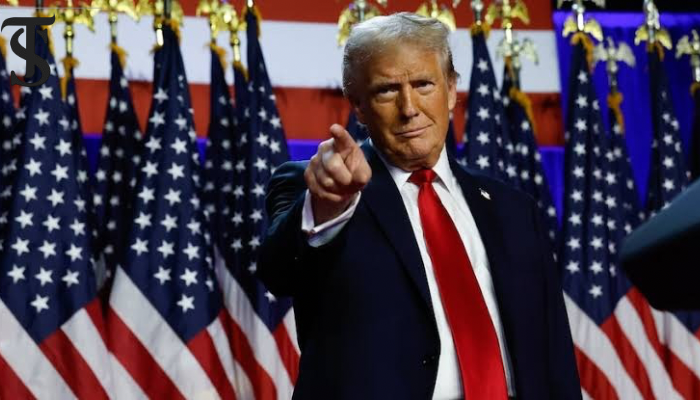
The United States of America has promulgated herNational Security Strategy in November 2025. It is considered as the future road map for the USA to be the most powerful, influential and prosperous country in the world. The document has highlighted the loopholes in American strategic thought and polices, primarily after the end of the cold war. The strategy is based on the need to protect the core national interests of the US, where the survival and safety of the state from traditional and non-traditional threats is of paramount importance. NSS-2025 provides the need to redefine the focused national interest, what America wants, regional and extra-regional priorities, and the principles and means to achieve the objectives. I will only analyze the two most important elements of the strategy, the Trump corollary of the “Monroe Doctrine”, and America’s role to deter military threat in the Indo-pacific, that may trigger a severe geopolitical response and competition from the major global actors.
Trump’s Corollary to the “Monroe doctrine’’
The strategy of ‘Enlist and expand’ is described in the strategy as a common sense and the potent resource to restore the American power, aligned with the US security interests. This echoes the famous 19th century “Monroe Doctrine”, implemented by the US president in 1823, and now the present strategy is called the Trump corollary of the president Monroe’s initiative. According to the present strategy the US will prioritize the regional champions to implement its enlisting and expansion strategy. But the question is why the US needed this and whether she will be able to obtain the desired outcomes? History and context always provide a valuable insight to understand any initiative or policy. In the present scenario, brief recapitulation of the “Monroe Doctrine”, may help to understand the importance and likely success, or the shortcomings of the newly forged roadmap.
When the US president James Monroe, announced his famous doctrine in 1823, with an aim to consolidate itself in its own hemisphere and after that expand itself. At that time the USA was almost a newly independent state and not as powerful to solely implement its strategy. The state was under constant threat of an invasion, specifically by the European states. At that time the America had to rely on the Britain’s sea power, and the only possibility for the success of the doctrine was akin to the common interests of the UK and the USA. America’s primary focus was on the western hemisphere, as no one was allowed to intervene in the US backyard. But the irony of this nexus came just after a decade, when the United Kingdom violated the doctrine and occupied the Falk Islands in 1833.
The Monroe doctrine was eulogized in the USA, and it was considered as the symbol of their manifest destiny, but outside America it was not appreciated. It was an isolationist policy in the first half of the 19th century and considering the current NSS as a corollary of the Monroe doctrine, may seem apparently to be another miscalculation of the milieu. This is an age of rapid globalization, where the world is connected as never before in history. It shows that America is relinquishing its global leadership role and is a sign of weakness. But on the other hand, the principles and means identified in the NSS 2025 to achieve the desired outcome don’t seem like the US is opting the isolationist tendencies, it hints a more robust US engagement, and the question is whether this strategy will be plausible? The present world order is heading towards multipolarity, where the global challenges are beyond the capacity of any single state to handle. As Fareed Zakaria has said that it is not the decline of the west but the rise of the rest, that is a real challenge for the USA. The recent NSS, may further erode American influence in the global affairs, and ultimately it will create a vacuum to be filled by someone else. The world, specifically the western block, and institutions like NATO, will be more skeptical of the role of America and skepticism usually leads to chaos and destruction. The NSS 2025, and the Trump corollary of the Monroe Doctrine, further echoes the German Bismarck, who remarked the original Monroe Doctrine as, “This extraordinary peace of insolence” and may prove to be an Achillis Heal for America.
Deterring military threats in the Indo-Pacific
There is a major emphasis in the NSS-2025 on American technological advancement to become a potent world leader, that largely depends on the semiconductors. For this purpose, the strategy has clearly highlighted Taiwan, a leader in producing semiconductors. The struggle to become a leader in technology has also been discussed in detail by Chris Miller in his book, “Chip War: The Fight for the World’s Most Critical Technology”. The strategy has also emphasized the importance of the South China Sea in as an epicenter of the world’s most crucial sea lane of communications, and the physical location of Taiwan as it divides the Northeast and the Southeast Asia andprovides the access to the second island chain in the south China sea.
The preservation of a military overmatch documented in the US strategy, in the South China sea will not be an easy task, as it may bring China and the USA, eyeball to eyeball with each other. If Taiwan becomes the pivot for the USA to maintain the status quo of its declining hegemony, it will become an existential threat for China. China claims the sovereignty and territorial integrity of Taiwan, and it is the prime objective of the Chinese maritime security strategy. The US declaration of enhancing military capabilities in the First island chain, and demand from Japan and South Korea to increase their defense spending to share the Burdon of regional security to deter any threat to the existing status quo in the region may bring the already precarious and tense security situation into havoc.
The proposed US engagements in the South China Sea particularly, make the security strategy ironical, as on theone hand the US is talking about the “America first”, non-intervention and focused national interest, on the other hand her intensions seem to be truly interventionist and devoid of focused national interest. It is rightly said that strategy is always elusive, and the principal motives always remain ulterior and difficult to comprehend. The US involvement in the Chinese backyard needs to be more sophisticated by keeping in view the multiple regional complications. Apparently, there is no direct threat to the US security in the South China Sea, but its intentions and future action may jeopardize the security of the region. China is already engaged in many maritime territorial disputes with Vietnam, Philippines and Japan in particular.Any haphazard action in the region may spark a severe backlash.
In a nutshell the US National Security Strategy 2025, can be called a confession of her miscalculated global engagements since the end of the Cold war, but as discussed above the real motives of the statecraft are always elusive and equally difficult is the task to know about the intentions of the others. Professor Mearsheimer, a renowned political theorist, says that he is unable to understand how the world works, despite being studying the global politics of the past three centuries. It is difficult to predict the future, but apparent symptoms and the intentions of the declining global hegemon may bring substantial changes in global affairs, only posterity can decide that up to what extent a policy becomes a success or a failure.
Disclaimer: The views and opinions expressed in this article are solely those of the author and do not necessarily reflect the editorial stance, policies, or official position of The Spine Times.

Nasir Imtiaz
The writer is a Research Associate at the National Institute of Maritime Affairs.


