

China-Africa Relations and the Shaping of African Political & Economic Sovereignty
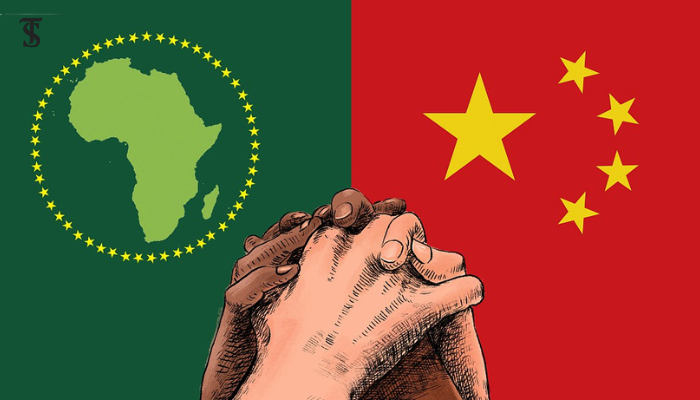
China’s engagement with Africa has undergone a profound transformation, evolving from solidarity-based support in the era of decolonisation to a sprawling and often controversial alliance. Today, China is Africa’s largest bilateral trading partner, a principal source of infrastructure financing, and a formidable geopolitical actor. As of 2024, trade between China and Africa stood at a record $289.3 billion, according to China’s Ministry of Commerce; more than double what it was a decade ago. The scope of China’s involvement ranges from mega infrastructure projects and digital systems to cultural exchanges and military cooperation. Yet this deepening entanglement rekindles long-standing questions: Is China helping Africa achieve sovereignty and development or entrenching a new dependency that undermines long-term autonomy and institutional resilience?
China’s early ties with Africa were rooted in shared anti-colonial sentiment. At the 1955 Bandung Conference, China aligned with newly independent African states, promoting South-South cooperation against Cold War superpowers. Symbolic projects like the TAZARA Railway linking Zambia and Tanzania in the 1970s embodied this solidarity. Over time, the relationship became more structured. The 2000 launch of the Forum on China-Africa Cooperation (FOCAC) marked a new institutional phase. Since then, Beijing has hosted eight FOCAC summits, pledging billions in aid and investment. The 2018 Beijing Summit alone saw China promise $60 billion in new financing. The 2013 introduction of the Belt and Road Initiative (BRI) globalised China’s development strategy, with over 50 African countries now signed onto BRI agreements, integrating into China’s expansive trade and logistics corridors.
China’s economic footprint in Africa is significant. By 2024, it accounted for more than 20% of Africa’s external debt, according to the China Africa Research Initiative (CARI) at Johns Hopkins University. The Export-Import Bank of China and China Development Bank are major lenders, especially for financially strained nations. Projects like Kenya’s $4.5 billion Standard Gauge Railway (SGR), Ethiopia’s Addis Ababa-Djibouti Railway, and Nigeria’s Lagos-Ibadan Railway are all Chinese-financed. While these projects close infrastructure gaps, they raise concerns about contractual opacity and repayment risks. Zambia’s 2020 Eurobond default, compounded by over $6 billion owed to Chinese lenders, is a cautionary tale. “Debt is not inherently bad,” notes Dr. Arkebe Oqubay, a senior Ethiopian adviser and co-author of China-Africa and an Economic Transformation. “But debt without productivity is deadly.” He calls for feasibility, transparency, and local integration. Many Chinese-led projects import materials and labour from China, sidelining African suppliers and workers. While countries like Nigeria and Ghana now enforce local content laws, most lack the leverage or political will to renegotiate unbalanced contracts.
Politically, China’s “non-interference” appeals to African governments weary of Western conditionalities. Beijing doesn’t tie investments to governance or human rights reforms, but
this has led to concerns about authoritarian consolidation. The 2023 Ibrahim Index on African Governance found Chinese funding heavily concentrated in states with weak accountability, such as Equatorial Guinea, Zimbabwe, and Sudan. Digital engagement is a newer, increasingly contentious frontier. Chinese firms like Huawei and ZTE dominate African telecom infrastructure. Huawei alone manages over 70% of the continent’s 4G base stations and is piloting 5G in South Africa, Egypt, and Kenya. Yet concerns around data sovereignty and surveillance persist. In Uganda and Zimbabwe, Chinese surveillance systems have reportedly been used to monitor journalists and political opponents. A 2020 French report alleged that servers in the China-built African Union headquarters in Addis Ababa secretly transferred data to Shanghai, an accusation denied by both parties and never conclusively resolved. Digital sovereignty has emerged as the next major battleground. Without regulatory capacity and digital independence, Africa risks ceding control over its future.
Despite imbalances, many African policymakers reject binary narratives of China as either saviour or coloniser. Instead, they pursue pragmatism, recognising China’s interests while resisting domination. The goal is to treat China as one of many partners, not a replacement hegemon. In April 2025, Kenya renegotiated its SGR loan, securing a longer grace period. Ghana’s new contracts mandate performance clauses and skills transfer. The African Union, through its Digital Transformation Strategy 2020–2030, is pushing for harmonised data protection laws. The African Continental Free Trade Area (AfCFTA), launched in 2021, also aims to boost intra-African trade and reduce external dependency. Yet implementation is uneven. Africa must take ownership of its development, viewing China and other partners as tools, not ends. The real goal is structural transformation, not just infrastructure expansion. Strategic alignment, not strategic submission, must guide this relationship.
A critical first step is improving debt transparency and pursuing collective renegotiation. Public contract disclosure can deter exploitative terms and improve accountability. Institutions like the African Union and the African Legal Support Facility offer mechanisms to harmonise debt diplomacy and strengthen Africa’s bargaining power. Equally vital is enforcing local content and industrial policies. Governments must insist on domestic labour, procurement, and skills transfer clauses in major contracts. These are not just about jobs. They are about building industrial capacity and breaking away from extractive economic models that stifle long-term growth. To avoid geopolitical overdependence, Africa must diversify its partnerships. This includes engaging with the European Union’s (EU) Global Gateway, Japan’s Tokyo International Conference on African Development (TICAD), and the U.S. Prosper Africa initiative. A multipolar strategy promotes competition, governance incentives, and reduces the risks of any single actor becoming indispensable or unaccountable.
Strong institutions are vital. Judicial independence, tighter procurement oversight, and empowered civil societies can ensure international agreements serve the public and not elite interests. Recalibrating China-Africa relations demands more than tactical fixes. It calls for a long-term vision centred on African agency, leveraging global partnerships wisely, and ensuring development reflects African priorities and not external prescriptions. The China-Africa relationship is no longer just about roads and railways. It is a contest of narratives, governance models, and strategic futures. As China recalibrates its global ambitions amid economic headwinds and geopolitical pushback, African nations must assert agency, demand reciprocity, and protect sovereignty. Whether China’s footprint becomes a bridge to self-determined development or a trap of renewed dependency will depend less on Beijing’s intentions than on Africa’s leadership, institutions, and collective resolve.
Disclaimer: The views and opinions expressed in this article are solely those of the author and do not necessarily reflect the editorial stance, policies, or official position of The Spine Times.
Justus Nam
The writer is a public policy expert and contributing writer with over 20 years of experience exploring China-Africa relations, African development, and global diplomacy.


