

Climate Migrants: A Nation on the Move as the Earth Heats Up
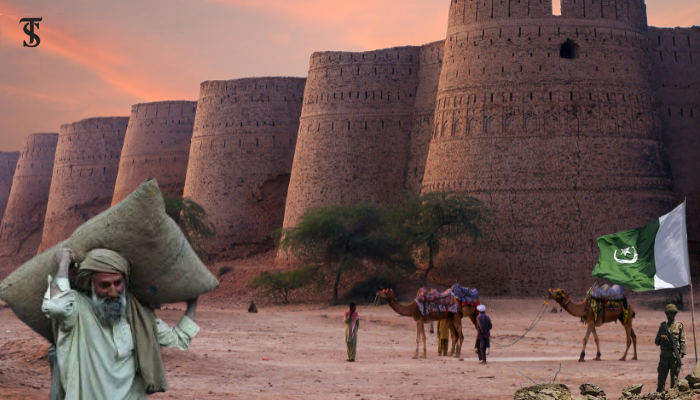
- Rising Climate Displacement: Pakistan faces increasing internal migration due to climate-induced disasters like floods and droughts, with millions already displaced and numbers expected to rise sharply.
- Lack of Legal Framework: Pakistan currently lacks a national policy or legal framework to recognize and rehabilitate climate migrants, relying instead on short-term relief efforts.
- Need for Legislative Action: Drawing from models like India’s TCMB 2022 bill, Pakistan must enact comprehensive legislation to protect climate migrants and ensure long-term resilience and recovery.
“We did not come here by choice. The flood took everything.” These words, echoed by countless survivors of the 2022 floods in Pakistan, encapsulate the silent yet growing crisis of climate-induced displacement. Unlike traditional migration driven by war, politics, or economic opportunity, these individuals are fleeing rising temperatures, erratic rainfall, prolonged droughts, and devastating floods. As the global climate crisis intensifies, climate-related migration is becoming an alarming reality, especially in vulnerable countries like Pakistan.
In the conventional understanding, migration is often associated with economic hardship, political instability, or conflict. However, climate change is rapidly emerging as a primary driver of displacement worldwide. In Pakistan, this is far from a theoretical issue. Over the past two decades, the country has experienced a series of catastrophic climate events, from the super floods of 2010 to the unprecedented monsoon flooding of 2022, which affected over 33 million people. According to the International Organization for Migration (IOM), over 8.2 million individuals were displaced by disasters within Pakistan in 2022 alone—a number that is projected to rise sharply in the coming years.
Pakistan’s diverse geography, combined with its socio-economic vulnerabilities, makes it particularly susceptible to climate shocks. In the north, glaciers feeding the Indus River are retreating due to global warming. Further downstream, mismanagement of water and upstream control by India have exacerbated water shortages. Simultaneously, regions like Cholistan are facing extreme droughts, compelling pastoral communities to abandon their traditional grazing routes. In Balochistan, rising temperatures and declining rainfall are turning once-fertile agricultural lands into barren deserts. In contrast, districts like Dadu in Sindh have experienced repeated inundations, leaving homes submerged and livelihoods shattered.
Notably, in 2022, India introduced the Climate Migrants (Protection and Rehabilitation) Bill (TCMB 2022), which aimed to create a comprehensive legal framework to safeguard and rehabilitate people displaced by climate events.
These climate-induced pressures are forcing large-scale internal migration. Increasingly, families are relocating to major cities such as Karachi, Lahore, Peshawar, and Islamabad—not in search of jobs, but because they have nowhere else to go. Karachi, in particular, has seen an influx of over 1.2 million people from the Indus Delta in the past two decades alone due to wetland shrinkage and saline intrusion. This unplanned urban migration is straining infrastructure, social services, housing, and job markets, creating new challenges for city planners and local governments.
Climate-induced displacement is not merely a humanitarian issue—it is a major development crisis. When families are forced to flee due to climate disasters, they lose everything: homes, land, livestock, employment, and community ties. Relocated to urban peripheries, many find themselves working in the informal sector, often for meager wages that do not compensate for their lost livelihoods. If effective action is not taken, it is estimated that Pakistan could face up to 2 million internal climate migrants by 2050.
In response to the 2022 floods, the Pakistani government took several emergency measures. It established the National Flood Response Coordination Centre (NFRCC) in August 2022, which brought together federal agencies, provincial authorities, and the Pakistan Armed Forces to lead relief and rescue operations. The military provided crucial logistical and engineering support, while the National Disaster Management Authority (NDMA) coordinated the procurement and distribution of relief supplies, including international aid. The government also launched a PKR 37.2 billion cash relief program to support 1.5 million flood-affected families. Additionally, the United Nations partnered with Pakistan to initiate the 2022 Pakistan Floods Response Plan (FRP), focusing on urgent humanitarian needs such as shelter, clean drinking water, food, and healthcare.
Despite these efforts, the challenges remain enormous. Many affected areas remain difficult to access due to damaged infrastructure, stagnant floodwaters, and rugged terrain. While some regions have begun recovering, the pace is slow, and thousands of families continue to live in limbo. The lack of a coherent long-term strategy has made recovery uneven and unsustainable.
Critically, Pakistan still lacks a dedicated national policy to address climate-induced migration. While there are disaster response mechanisms, they largely focus on short-term relief and overlook the long-term rehabilitation and resettlement of displaced communities. There is currently no legal recognition of climate-induced internally displaced persons (IDPs), nor is there a coordinated national framework for their relocation and protection. Much of the aid response continues to rely heavily on external donors, and reconstruction after the 2022 floods remains sluggish.
However, Pakistan is not alone in facing these challenges. Countries such as Bangladesh and India are also grappling with the increasing burden of climate migration. India has had to deal with cross-border migration from Bangladesh, another climate-vulnerable nation. Notably, in 2022, India introduced the Climate Migrants (Protection and Rehabilitation) Bill (TCMB 2022), which aimed to create a comprehensive legal framework to safeguard and rehabilitate people displaced by climate events. The bill proposed the creation of a central authority to oversee the relocation process, as well as a dedicated Climate Migration Fund to support necessary interventions. Though the bill was not passed by the Indian Parliament, it offers a compelling legislative model for Pakistan.
Given its history of climate disasters and projected future risks, Pakistan urgently needs to adopt a similar legislative approach. Enacting a legal framework to recognize and protect climate migrants would mark a significant step toward building national climate resilience. It would also help bridge the gap between short-term relief and long-term rehabilitation, ensuring that displaced communities are not left behind.
In conclusion, climate-induced migration is no longer a future possibility—it is a present reality for Pakistan. The floods of 2010 and 2022 were stark reminders of what is at stake. To prevent history from repeating itself on an even greater scale, Pakistan must act now by implementing robust, future-oriented legislation that protects its most vulnerable citizens as the climate crisis deepens.
Disclaimer: The views and opinions expressed in this article are solely those of the author and do not necessarily reflect the editorial stance, policies, or official position of The Spine Times.


