
Dostoevsky’s Unearthed Legacy: The Birth of Embodied Existentialism

What does freedom really mean? For Fyodor Dostoevsky, it was never an abstract philosophy but a tormenting reality at the core of human existence. Long before the word existentialism was coined, Dostoevsky’s novels wrestled with the very arguments that, in the 20th century, came to dominate philosophy: freedom, despair, doubt, and the unremitting search for meaning. The argument is simple: without Dostoevsky, there is no existentialism. His novels didn’t merely anticipate the movement—they supplied its emotional and psychological DNA.
Take Notes from Underground. This short novel is something of a rant against rational systems. With its protagonist asserting the right to act against his own interests, the book becomes grotesque in its petty, self-destructive tendencies, yet remains unsettlingly alive. Walter Kaufmann once called the opening of Notes from Underground “the best overture for existentialism ever written,” and Jean-Paul Sartre later echoed this by asserting that “existence precedes essence.”
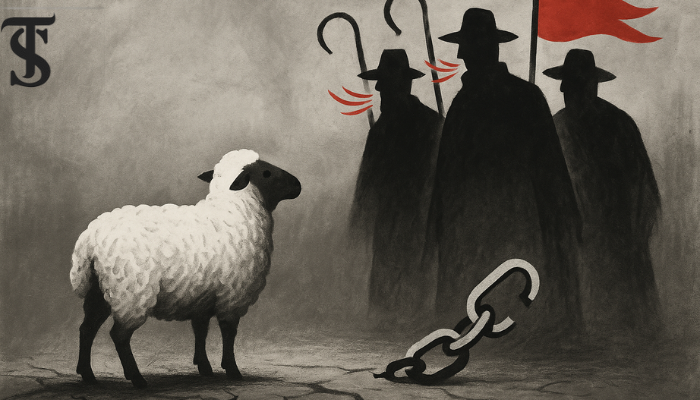
Dostoevsky’s genius was in seeing freedom as both blessing and curse. His characters sabotage their own happiness simply to prove that they are free. This is what we now call “existential anxiety.” Kierkegaard described it as “the dizziness of freedom.” Dostoevsky showed it in the most intimate way—not in philosophical treatises but through flesh-and-blood characters.
Yet Dostoevsky’s existentialism was not purely secular. In The Brothers Karamazov, Ivan’s rebellion against God and the parable of the “Grand Inquisitor” expose the tension between belief and doubt. This spiritual wrestling—half faith, half rebellion—distinguished Dostoevsky’s existentialism from the defiant, godless strains that later dominated European thought. His work was tethered to the soul’s hunger for redemption.
That is why he became a touchstone for later thinkers. Sartre quoted him. Camus drew inspiration from his novels while developing his own idea of the absurd. Nietzsche discovered him late, but admitted: “The only psychologist from whom I had anything to learn.” Imagine—a novelist commanding such respect from three of philosophy’s giants.
Even Dostoevsky’s style has been recognized for its philosophical import. The great critic Mikhail Bakhtin called his novels polyphonic: many voices speaking, none fully dominating. This narrative chaos—where no single authority prevails but competing perspectives clash—was itself a reflection of the existential condition. Critics initially dismissed his novels as chaotic and pessimistic, but history proved otherwise. By dramatizing the conflicts of freedom, despair, and faith, Dostoevsky gave birth to the vocabulary of modern existentialism.
Why does it matter now? Because Dostoevsky reminds us—in an age of algorithms and curated identities—that freedom is messy, painful, and unavoidable. It is a form of authenticity that demands confrontation with contradictions within ourselves. Existentialism did not emerge from a philosophy seminar; it was born in Dostoevsky’s dark, tangled novels, where ordinary men wage extraordinary battles with themselves. And we are still fighting those battles today.
This is why the “element” found in Dostoevsky’s works is introduced here as embodied existentialism. Dostoevsky’s true existential novelty does not lie in abstract argument but in the way he stages existential doubt as a condition of the body—an affliction that precedes and exceeds rational thought. In Notes from Underground and The Brothers Karamazov, despair is not an intellectual puzzle but a lived, bodily reality: invading flesh, disrupting coherence, and breaking through words.
Disclaimer: The views and opinions expressed in this article are solely those of the author and do not necessarily reflect the editorial stance, policies, or official position of The Spine Times.