

Geopolitics of Space: Strategic Competition in the 21st Century
Introduction
Space has ceased to be a scientific enterprise, but rather an aspect of a strategic space where states manifest power, practice sovereignty, and bargain power. The post-Cold War optimism, in which it was anticipated that space would be a collaborative common, has been replaced by the new competitive period, distinguished by the militarization of satellites and by the staking of the lunar resources and by competing models of governance. Commercial ecosystem and defense infrastructure combine to enable the United States to retain orbital superiority. At the same time, the Chinese state-driven system is becoming increasingly higher, not denying the casting of the moon, exploration of asteroids, and constellations of satellites of the whole world. This paper examines the geopolitical equations that will shape space operations in the 21st century and how the convergence of technologies, legal grayness, and power interests is redrawing the contours of international politics. In doing so, it fails to situate space as an external frontier; however, as a center of international rivalry.
Importance of Space
The use of satellites contributes to modern warfare with missile guidance, communications on the battlefield, and early warning systems, being some of the contributions. Space-based systems are linked with civil life, as well: they drive atmospheric traffic control, ATMs, emergency response, and more. As nations now look to the latest space gold rush, asteroid mining, and water ice or helium-3 on the moon, the economic interest in space has exploded. Space success brings prestige and diplomatic powers. India’s Chandrayaan-3 mission and China’s Tiangong space station highlight how exploration doubles as geopolitically potent soft power.
Major Space Actors in the 21st Century
United States
The United States still leads in budget, infrastructure, and a vibrant private sector. In 2023, it plans to spend approximately $73 billion on its space budget or about 63% of global government expenditure, funding the NASA Artemis program among other space defense programs, especially the orbital protections within the United States Space Force. The Artemis campaign aims to send people back to the Moon by the mid-2020s, acting as a precursor to a mission to Mars, combining government science ambitions and commercial lander and delivery agreements to lower the cost.
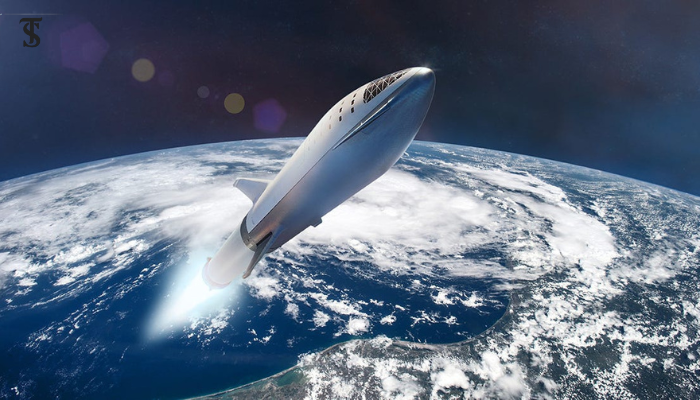
Even the heavy-lift launch systems such as SpaceX, Starship-Super Heavy are changing the economics of launches with the promise of greater payload and at reduced prices, and have to undergo scrutiny by FAA regulators as well. U.S space diplomacy, based on the Artemis Accords, integrates scientific leadership and coalition building in establishing governance of space.
China
The state-driven Chinese space program has developed quickly, accomplishing space missions such as the Chang’e lunar sample returns to the Tianwen interplanetary missions. The Tiangong space station, non-stop working nonstop since its launch, and the scheduled crewed landing on the lunar surface in 2030 demonstrate the intentions of Beijing. Successful recent tests of the Lanyue lunar promise to indicate the preparedness for prolonged moon activity.
China is constructing the International Lunar Research Station (ILRS), in collaboration with Russia, and expanded its space sector to expand its commercial space sector, as well as satellite mega-constellations such as Guowang. Its in-built civil-military system makes it grow fast as far as technology is concerned, although the state maintains high-level control.
Russia
The space plans of Russia are in transition under geopolitical constraints, internal economic pressure. Western sanctions have, since the 2022 invasion of Ukraine, crippled the industry, with the sector being denied access to advanced electronics, losing significant export profits, and significantly reducing launches. Reports indicated that Roscosmos lost approximately 180 billion rubles (approximately 2.1 billion dollars) in revenue, and so have the launch contracts, which have dropped to 90 percent (The National | FPRI). It is this economic crunch that has impacted the retention of the workforce and projects like GLONASS modernization.
Nevertheless, Russia is already going ahead with the Russian Orbital Service Station (ROSS), targeted to launch in 2027 in Sun-synchronous orbit as the workhorse of the orbital optical systems and a landing point and depot station in the future, even though analysts are skeptical. Diplomatic relations with NASA continue in several spheres, such as operation of the ISS, https://share.google/2FHKGoPgWEvLkFa8Zyet. Russia has a greater strategic affiliation with China under the ILRS system.
India
The Indian space pathway has been changed from low–cost innovation to a full-scale capability builder. Chandrayaan-3’s landing at the south pole of the moon was referenced as a landmark action that improved the profile of ISRO internationally in the month of August 2023.
ISRO is developing human spaceflight with a focus on the Gaganyaan project as well as the proposed Bharatiya Antariksh Station (BAS-1) module set to be ready by 2028. ISRO declared 2025 as Gaganyaan Year, and in December, the mission, accompanied by humanoid robot Vyommitra, is planned along with preparations to launch Chandrayaan-4 and Chandrayaan-5.
India has a defensive stance of the 2019 Space-Based Surveillance constellation Phase III, led by an April 2019 Mission Shakti anti-satellite test. In the meantime, startups such as Skyroot and Agnikul are ramping up launch services to help it achieve the goal of a $44-billion space economy in this decade. Other infrastructure developments are a third launch pad by 2029 at Sriharikota.
Militarization and Weaponization
The launch of anti-satellite (ASAT) missiles in 2007 by China, 2008 by the United States, 2019 by India, and the instances of satellite jamming, proximity maneuvers, and cyber-interference, among others, highlight the fact that space is becoming a potential fighting medium. Reuters has reported that orbital dogfights as well as U.S Space Command contingencies in space warfare have emerged, especially in cases of increased tensions in Taiwan.
Strategic Alliances
The space unions are still being formed in geopolitical blocs. The Artemis Accords set up regulations regarding peaceful lunar exploration and exploitation of resources by the U.S, which have been signed by over 30 countries to date, but not by China or Russia. Conversely, the International Lunar Research Station (ILRS), which Beijing and Moscow developed cooperatively, has an ideological and normative meaning behind it, where a long-term scientific and logistic presence on the Moon is expected to result.
Flashpoints
There is mounting competition for resources in space and especially water ice deposits, which can be refined into rocket fuel, on the Moon. Nuclear-powered keep-out zones to protect Artemis mission sites are being developed by the U.S., with China and Russia working on ILRS development against the same area. The clash of rivals’ infrastructure over scarce resource areas increases the possibility of face-to-face confrontation.
Global Order implications
The extraterrestrial resources have long since started to be weaponized by orbit and race, not just as a theory. Electronic attacks by jamming might disable the worldwide communications network of satellite systems, electronic exchanges of goods and services, weather prediction, and the military chain of command. One side of managing lunar water ice or strategic metals has the potential of long-term economic and military benefits, and through this, the global balance in power may once again shift.
Without proper control, distrust among space-faring powers risks being transferred to the politics of Earth, causing new arms races to occur and fuel the geopolitical walls. The 21st-century space race will not be just about first to arrive at target space; it will also involve who dictates the rules- rules that could either treat space as an international common ground or as another battlefield of strategic conflict.
Conclusion
The 21st-century space is no longer a mute arena; it is now a political chessboard where each satellite, lunar rover, and module of space station is a chess piece in a high-speed game. Whether it is the Artemis Accords in Washington or the ILRS vision in Beijing and Moscow, competing blocs are not only racing to plant flags in space, but the rules that will define the next frontier of humankind. It is not Moon rocks as the prize but control over communications lifelines, energy sources, and flows of resources that may shift the balance of world power across generations. But with no security rails, we risk seeing beguiling space become the new high ground of combat, where the victor not only secures the stars but answers the question of our future planetary order.
Disclaimer: The views and opinions expressed in this article are solely those of the author and do not necessarily reflect the editorial stance, policies, or official position of The Spine Times.


